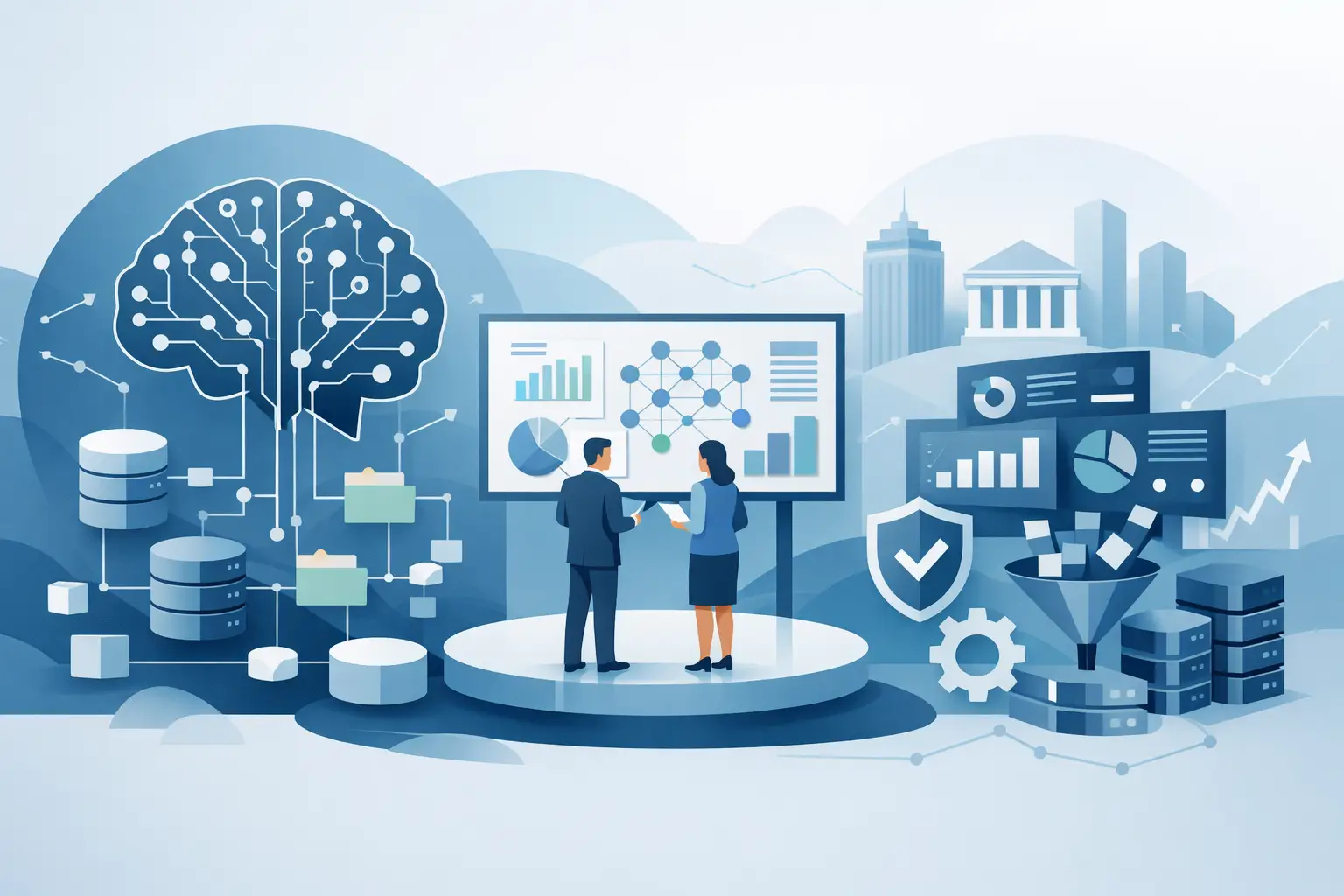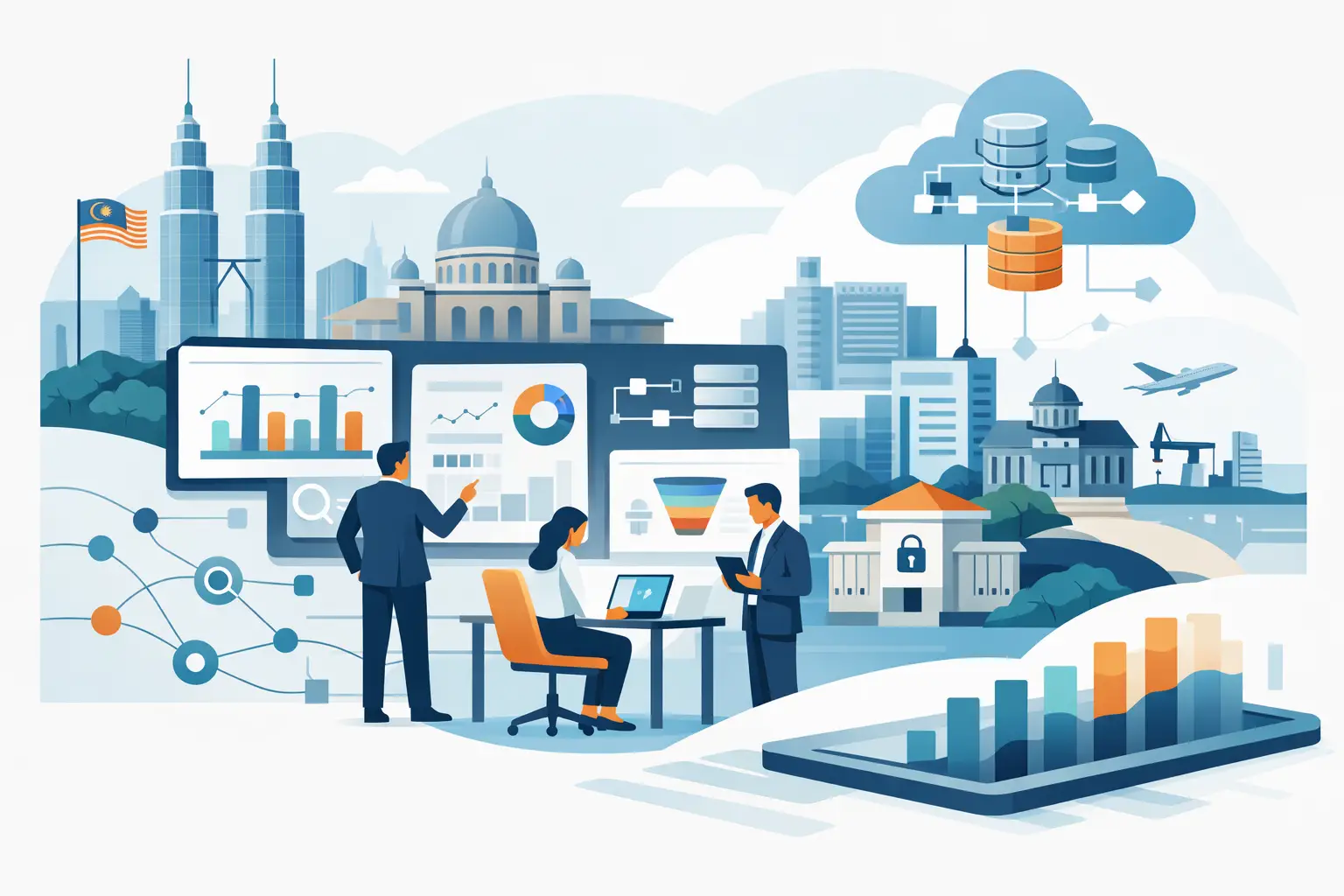
When executives ask why analytics programs stall after significant platform investment, the answer is rarely a lack of dashboards or storage. More often, the issue sits in the layer between raw data and business use – where definitions drift, pipelines break, controls are inconsistent, and teams cannot trust what they see. That is where malaysia analytics engineering services matter most. They turn fragmented data estates into governed, usable, decision-ready assets that can support reporting, automation, and AI at enterprise scale.
For banks, insurers, government agencies, GLCs, and large enterprises, this is not a technical refinement. It is an operating model decision. If the data foundation is unstable, every downstream initiative becomes slower, riskier, and more expensive to maintain.
What malaysia analytics engineering services actually solve
Analytics engineering sits between data engineering, business intelligence, governance, and business operations. Its role is to make data usable in practice, not just available in theory. A modern enterprise may already have data warehouses, cloud platforms, reporting tools, and data science initiatives, yet still struggle with duplicate metrics, inconsistent business logic, and low confidence in outputs.
That gap often appears in familiar ways. Finance and risk teams report different numbers for the same measure. Data teams spend more time reconciling than improving. Compliance reviews are manual because lineage is unclear. AI pilots stall because source data is incomplete, poorly modeled, or not governed for enterprise use.
Analytics engineering services address these conditions by designing trusted data models, standardizing transformation logic, operationalizing data quality controls, and aligning technical delivery with business definitions. The result is not simply cleaner pipelines. It is a decision environment where leaders can act faster because the data layer is structured for consistency, traceability, and scale.
Why demand is rising in Malaysia
The need for analytics engineering is increasing in markets where regulation, operational complexity, and modernization pressures intersect. Malaysia is a strong example. Enterprises across BFSI, public sector, and GLC environments are modernizing legacy estates while managing strict expectations around governance, resilience, security, and increasingly, data sovereignty.
In that context, analytics engineering becomes a practical discipline rather than an abstract one. Organizations need data platforms that can operate across cloud, on-premises, and hybrid environments. They need models that support both enterprise reporting and emerging AI use cases. They need governance that does not exist only in policy documents, but in actual data pipelines, controls, approvals, and auditability.
This is why Malaysia analytics engineering services are gaining executive attention. They help organizations move beyond isolated modernization efforts and create a data operating model that supports measurable outcomes. That may mean faster regulatory reporting, better customer intelligence, more reliable planning inputs, or stronger operational automation. The common thread is trust at scale.
The difference between a platform project and an analytics engineering program
Many enterprises invest in technology first and design operating discipline later. That sequence creates predictable friction. A lakehouse may be deployed, but business-ready data products never materialize. BI tools may be upgraded, but semantic consistency remains unresolved. AI ambitions may be approved, but foundational data quality is still too uneven for production use.
An analytics engineering program addresses that middle layer deliberately. It defines how raw data is transformed into reusable, governed, and business-aligned assets. It treats data models, lineage, testing, observability, and documentation as operational requirements, not optional enhancements.
This distinction matters because platforms do not create value on their own. Value is created when business domains can depend on data products that are stable, explainable, and aligned to enterprise definitions. Without that discipline, modernization can increase complexity rather than reduce it.
Core capabilities within malaysia analytics engineering services
The most effective services in this space combine architecture, implementation, and enablement. They do not stop at strategy workshops, and they do not reduce delivery to pipeline development alone.
At the foundation is data modeling. This includes designing curated layers that reflect how the business actually measures performance, risk, service delivery, and customer activity. Good modeling reduces duplication and makes analytics easier to govern over time.
Then comes transformation design and orchestration. Business logic must be standardized, versioned, tested, and maintainable. If logic lives across spreadsheets, ad hoc SQL, and department-specific reports, the organization cannot scale consistency.
Data quality engineering is equally important. This goes beyond checking whether records load successfully. Enterprise quality controls should monitor completeness, validity, timeliness, reconciliation, and exception handling in ways that matter to each domain.
Governance also needs to be operationalized. That means lineage, policy enforcement, role-based access, retention alignment, and clear ownership. In regulated sectors, this is essential. In every sector, it improves accountability.
Finally, the strongest analytics engineering services include workforce enablement. If the internal team cannot sustain the models, controls, and delivery methods after implementation, the organization remains dependent and progress slows.
What enterprise buyers should evaluate
Not all service providers approach analytics engineering with the same depth. Some focus narrowly on tool implementation. Others stay at advisory level and leave execution gaps behind. For enterprise buyers, especially in regulated industries, the better question is whether the partner can translate strategy into operating capability.
That requires a few things. First, industry context matters. A provider working with banking, insurance, or government data should understand control environments, audit expectations, and the consequences of inconsistent data definitions.
Second, architecture capability matters as much as pipeline delivery. Enterprises rarely operate in a greenfield environment. The provider should be able to work across legacy systems, modern cloud services, hybrid estates, and evolving data governance requirements.
Third, capability transfer matters. A well-run program should leave behind standards, reusable patterns, documentation, and internal team maturity. The goal is not just implementation success. It is sustained institutional capability.
This is where firms such as ORTECH often stand apart – not by presenting technology as the answer, but by connecting data platform modernization, governance, engineering execution, and organizational readiness into one delivery model.
Common trade-offs leaders should recognize
There is no universal blueprint for analytics engineering. The right approach depends on regulatory context, data estate maturity, internal capability, and the speed of business change.
For example, centralized models can improve control and consistency, but they may slow domain responsiveness if governance becomes too rigid. A more federated approach can improve agility, but only if shared definitions, testing standards, and ownership boundaries are well established.
Cloud-first architecture may accelerate scalability and service innovation, yet some workloads, datasets, or compliance requirements may justify hybrid or on-premises patterns. Likewise, aggressive automation can reduce manual effort, but only when the underlying business logic is mature enough to automate responsibly.
These are not reasons to delay modernization. They are reasons to design it carefully. Strong analytics engineering services help organizations make these trade-offs explicitly instead of discovering them through operational failures later.
How analytics engineering supports AI readiness
AI readiness is often discussed as a model or tooling issue, but for most enterprises it is a data issue first. If business definitions are inconsistent, lineage is weak, and quality controls are limited, AI systems inherit those weaknesses.
Analytics engineering improves AI readiness by creating governed, reusable data products with known provenance and business meaning. It helps standardize the features, dimensions, and metrics that intelligent systems depend on. It also creates a stronger control environment for monitoring, explainability, and data access.
This does not guarantee AI success. Some use cases still fail because process ownership is unclear or expected value is overstated. But it does create the preconditions for AI to move beyond pilots and into operational use with less friction.
A practical sign your organization is ready
An enterprise is usually ready for analytics engineering investment when data friction starts affecting business execution, not just reporting convenience. That may show up as delayed board reporting, duplicated metric reconciliation, stalled automation efforts, audit pressure, or AI programs that cannot progress beyond experimentation.
At that point, the goal should not be to add another disconnected tool. It should be to create a governed data layer that supports enterprise decisions consistently across functions.
The organizations that get this right treat analytics engineering as a strategic capability. They do not see it as a side task for BI teams or a temporary step before AI. They recognize it as the discipline that turns fragmented data into trusted operational intelligence.
That is the real value of malaysia analytics engineering services. Not more dashboards, and not more platform complexity. Better decisions, stronger control, and a data foundation the business can actually rely on when the stakes are high.
About ORTECH
OR Technologies Sdn Bhd (ORTECH) is Malaysia’s Analytics Engineering Company, helping organisations turn fragmented data into trusted, AI-ready assets that drive faster decisions, automation, and innovation. Since 2006, we have partnered with government agencies, GLCs, financial institutions, healthcare organisations, and enterprises to modernise analytics, build AI-ready data platforms, and deliver measurable business outcomes. If you’re exploring how to improve your data strategy, accelerate AI adoption, or modernise your analytics environment, Schedule a complimentary Data & AI Strategy Session with our experts. We’ll help you assess your current landscape, identify opportunities, and recommend a practical roadmap tailored to your organisation, without any obligation.