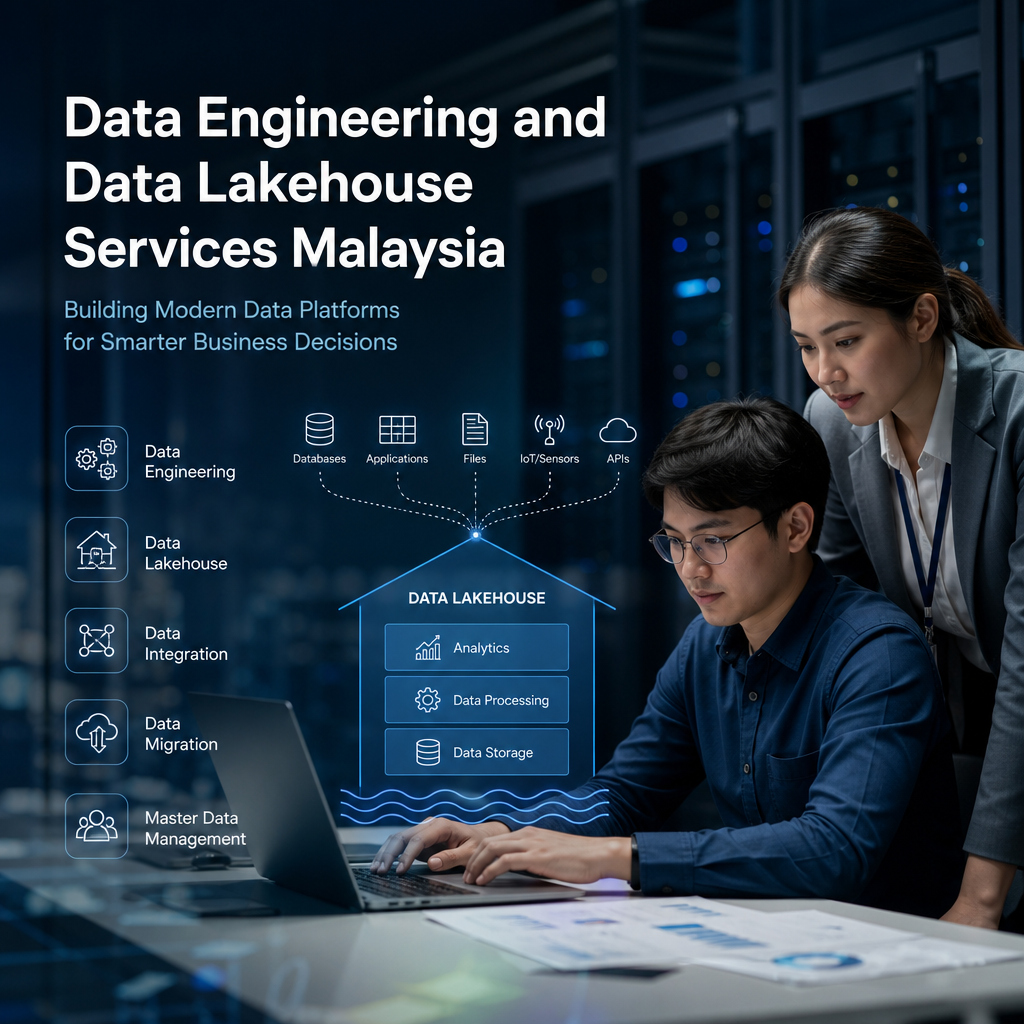
Data engineering has become a strategic capability for organizations seeking to improve decision velocity, strengthen governance, modernize legacy estates and establish a reliable foundation for enterprise AI. For government agencies, BFSI institutions, GLCs and large enterprises, the challenge is no longer simply moving data between systems. Instead, it is about creating a scalable, governed and business-aligned data platform that can support operational reporting, advanced analytics, regulatory requirements and AI initiatives with confidence.
OR Technologies Sdn Bhd (ORTECH) helps organizations design, build and operate modern data engineering capabilities that transform fragmented data environments into trusted enterprise assets. Established in 2006, ORTECH combines Analytics Engineering, Analytics Automation, data lakehouse architecture, data governance and AI-ready data platform expertise to help leadership teams derive measurable value from their data investments.
Our approach addresses the full data lifecycle: source assessment, data integration, data migration, data quality, master data management, lakehouse architecture, governance, operating model design and ongoing platform optimization. The result is a modern data platform that is resilient, scalable, auditable and ready to support enterprise analytics and AI at scale.
Data Engineering: Business Challenges

Many organizations have invested significantly in data warehouses, reporting platforms, cloud services and departmental analytics solutions. Yet business leaders often continue to face inconsistent reporting, slow access to trusted information and limited confidence in enterprise data.
Common challenges include:
- Fragmented data across core systems, operational applications, spreadsheets, data warehouses and cloud environments
- Complex, brittle data integration processes that are expensive to maintain and difficult to scale
- Legacy data migration programmes that lack clear governance, reconciliation and business ownership
- Inconsistent master data across customer, product, supplier, asset, employee and financial domains
- Poor visibility into data lineage, data quality and the controls supporting critical reports
- Data lake environments that have become difficult to govern, discover and operationalize
- Limited readiness to support AI, machine learning and generative AI use cases with trusted enterprise data
- Multiple analytics tools and teams working independently, resulting in duplicated effort and conflicting metrics
- Increasing regulatory, audit and compliance expectations around data controls, access and evidence
- Unclear accountability between IT, data teams, business functions, risk, finance and internal audit
For CIOs, CTOs, CDOs, CFOs and transformation leaders, these issues create more than technical inefficiency. They affect financial controls, regulatory reporting, operational performance, customer experience, strategic planning and the ability to realize value from AI investments.
Data Engineering: ORTECH Approach
ORTECH applies an Analytics Engineering-led approach to data engineering. We focus on the connection between platform architecture, data operating models, business consumption and measurable outcomes. Rather than treating data engineering as an isolated technology programme, we help organizations establish the capabilities required to manage trusted data as an enterprise asset.
Our engagement model typically spans five integrated workstreams.
1. Assess and Prioritize
We begin by assessing the current data estate, critical business domains, strategic use cases, data risks, integration dependencies and organizational capabilities. This gives leadership a clear view of the highest-value modernization opportunities, data control gaps and platform constraints.
2. Define the Target Data Architecture
ORTECH designs a target-state architecture that aligns data lakehouse, data warehouse, cloud, on-premises and hybrid environments with business priorities. Architecture decisions are guided by scalability, performance, security, interoperability, digital sovereignty, regulatory obligations and long-term operating cost.
3. Establish Governance by Design
Governance is embedded into the engineering lifecycle rather than added after implementation. We define data ownership, stewardship, standards, metadata, lineage, quality controls, access policies and evidence requirements for critical data assets and reporting processes.
4. Build and Industrialize Data Pipelines
We design and implement reusable data integration patterns, automated pipelines, quality controls and monitoring capabilities. This improves the speed and reliability of data delivery while reducing manual intervention and dependence on undocumented processes.
5. Operationalize for Scale and Adoption
A sustainable modern data platform requires more than technical deployment. ORTECH supports operating model design, capability transfer, service management, platform governance and analytics enablement so that internal teams can manage, extend and govern the platform over time.
Service Capabilities
Modern Data Platform and Data Lakehouse Architecture
ORTECH designs modern data platform architectures that enable organizations to unify structured, semi-structured and unstructured data across operational, analytical and AI workloads. Our data lakehouse architecture services help organizations balance flexibility with governance, allowing data teams to support enterprise reporting, self-service analytics, advanced analytics and AI from a common trusted foundation.
We assess the appropriate role of data lakes, warehouses, lakehouses, data virtualization and domain-oriented data products within the wider enterprise architecture. The objective is not to replace every existing platform, but to establish a pragmatic architecture that reduces duplication, improves access to governed data and supports evolving business needs.
For a practical perspective on this model, see what data lakehouse architecture solves.
Key considerations include:
- Enterprise data domain design and prioritization
- Hybrid and multi-cloud architecture strategy
- Open data architectures and interoperability
- Data storage, compute and workload separation
- Performance, scalability and cost management
- Security, access controls and digital sovereignty
- Metadata, cataloguing, lineage and observability
- Readiness for AI, machine learning and intelligent automation
Enterprise Data Integration and Analytics Automation
Reliable data integration is essential to timely and trusted decision-making. ORTECH helps enterprises modernize data ingestion, transformation and orchestration across legacy systems, cloud applications, operational platforms and external data sources.
Our Analytics Engineering methodology emphasizes maintainable, reusable and controlled data pipelines. In addition, we use automation to reduce manual processing, shorten delivery cycles and improve the consistency of transformation logic across reporting and analytics environments.
This capability includes:
- Data integration strategy and integration pattern design
- Batch, near-real-time and event-driven data pipelines
- ETL and ELT modernization
- Data transformation and business rule automation
- Workflow orchestration, scheduling and monitoring
- Data reconciliation and exception management
- API, file-based and database integration
- Analytics Automation with Alteryx One
- Controlled publishing of curated datasets for reporting, analytics and AI use cases
For organizations with substantial manual reporting, reconciliation or operational data preparation activities, Analytics Automation can deliver significant improvements in efficiency, traceability and control.
Data Migration and Legacy Modernization
Data migration is a business-critical transformation activity, particularly where organizations are replacing core systems, consolidating platforms, migrating to cloud environments or modernizing legacy data warehouses. ORTECH helps organizations manage data migration with a disciplined approach to scope, quality, reconciliation, cutover and post-migration assurance.
Our services address both technical and business dimensions of migration, ensuring that critical data is moved, validated and made usable within the target environment.
Key areas include:
- Legacy application and data estate assessment
- Data migration strategy and phased migration roadmaps
- Source-to-target mapping and transformation design
- Historical data retention and archival planning
- Data cleansing, standardization and enrichment
- Migration quality rules, reconciliation and controls
- Cutover planning and operational readiness
- Post-migration validation and business sign-off
- Legacy reporting modernization and dependency rationalization
For regulated industries and public sector organizations, ORTECH also supports the development of migration evidence, data control documentation and audit-ready assurance processes.
Master Data Management and Data Quality Engineering
Inconsistent master data undermines analytics, operations, compliance and customer experience. ORTECH helps organizations establish master data management and data quality capabilities for critical enterprise domains such as customers, citizens, products, vendors, assets, locations, employees and financial hierarchies.
We focus on the governance, processes and engineering controls required to make master data dependable across business functions and systems. This includes defining clear ownership, common standards and quality measurement mechanisms that can be sustained beyond the initial implementation.
Our master data management and quality services include:
- Data domain identification and business ownership models
- Master data strategy and target operating model
- Data standards, definitions and reference data controls
- Entity matching, deduplication and survivorship rules
- Data quality profiling, rule design and monitoring
- Data issue management and remediation workflows
- Critical data element identification
- Data quality scorecards and executive reporting
- Integration of master data into analytics, operational and AI-ready platforms
This approach enables organizations to improve confidence in management reporting, risk calculations, financial processes and customer or citizen-related insights.
Data Governance, Lineage and Control Frameworks
As data environments become more distributed, governance must be integrated into platform design and operational processes. ORTECH helps organizations build enterprise data governance frameworks that provide accountability, transparency and control without slowing the delivery of business value.
Our governance services are designed to support the requirements of executive leadership, business owners, risk functions, internal audit, compliance teams and technical delivery teams. We help organizations define practical governance models that can be embedded into day-to-day data operations.
Core capabilities include:
- Enterprise data governance framework design
- Data ownership, stewardship and accountability models
- Data policy, standards and control libraries
- Data cataloguing, metadata management and business glossary development
- Data lineage and traceability for critical reports and analytics
- Data access, classification and retention controls
- Data quality governance and issue escalation processes
- Data governance maturity assessment
- Internal audit analytics and data control assurance
For Head of Internal Audit and risk leaders, ORTECH can help establish data controls and evidence mechanisms that improve assurance over critical reporting, regulatory submissions and automated decision processes.
AI-Ready Data Engineering and Enterprise AI Readiness
Enterprise AI initiatives depend on the availability of trusted, accessible and governed data. Without a robust data engineering foundation, AI programmes often remain limited to isolated proofs of concept or create unnecessary risk through inconsistent data, weak access controls and inadequate lineage.
ORTECH helps organizations prepare their data platforms for enterprise AI by addressing the foundations described in the AI-ready data platform requirements guide. These capabilities include data quality, metadata, access control, governance, scalable pipelines and model-ready data products.
As a result, organizations can move from experimental AI use cases to production-ready delivery with stronger control and better business alignment.
Why This Capability Matters for Enterprise Modernization
Strong data engineering connects business priorities with reliable platform execution. It also reduces the cost of duplicated work, improves consistency across reporting and creates a foundation for future digital services, automation and AI.
When organizations treat the data platform as shared infrastructure rather than isolated projects, they gain better control over change, lineage and quality. In turn, leaders can make faster decisions with greater confidence.
Delivery Model and Governance Support
ORTECH works with technology, data and business stakeholders to align delivery with operating reality. We collaborate with internal teams to define priorities, document controls, manage dependencies and support adoption after implementation.
Where required, we also help organizations connect platform work with broader advisory services such as data strategy consulting and governance services in Malaysia.
External References for Best Practice
For broader guidance on the importance of data quality in analytics and AI, see the ISO/IEC 25012 data quality model.
Outcome
With the right data engineering capability, organizations can reduce complexity, improve trust in data and accelerate analytics and AI adoption. ORTECH helps clients build practical, governed and scalable modern data platforms that support long-term transformation goals.
The outcome is a more resilient data estate, stronger business confidence and a clearer path from raw data to operational value.