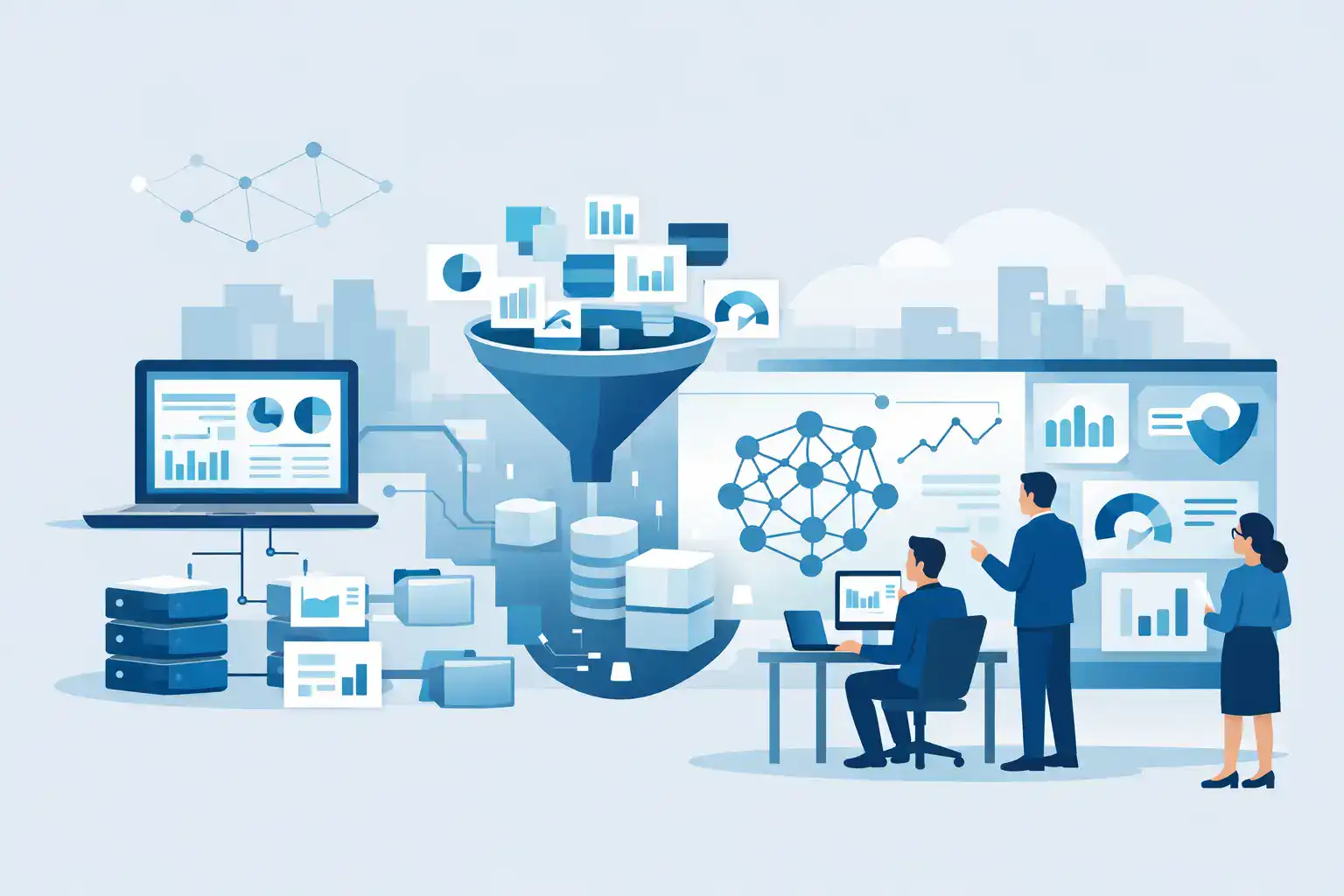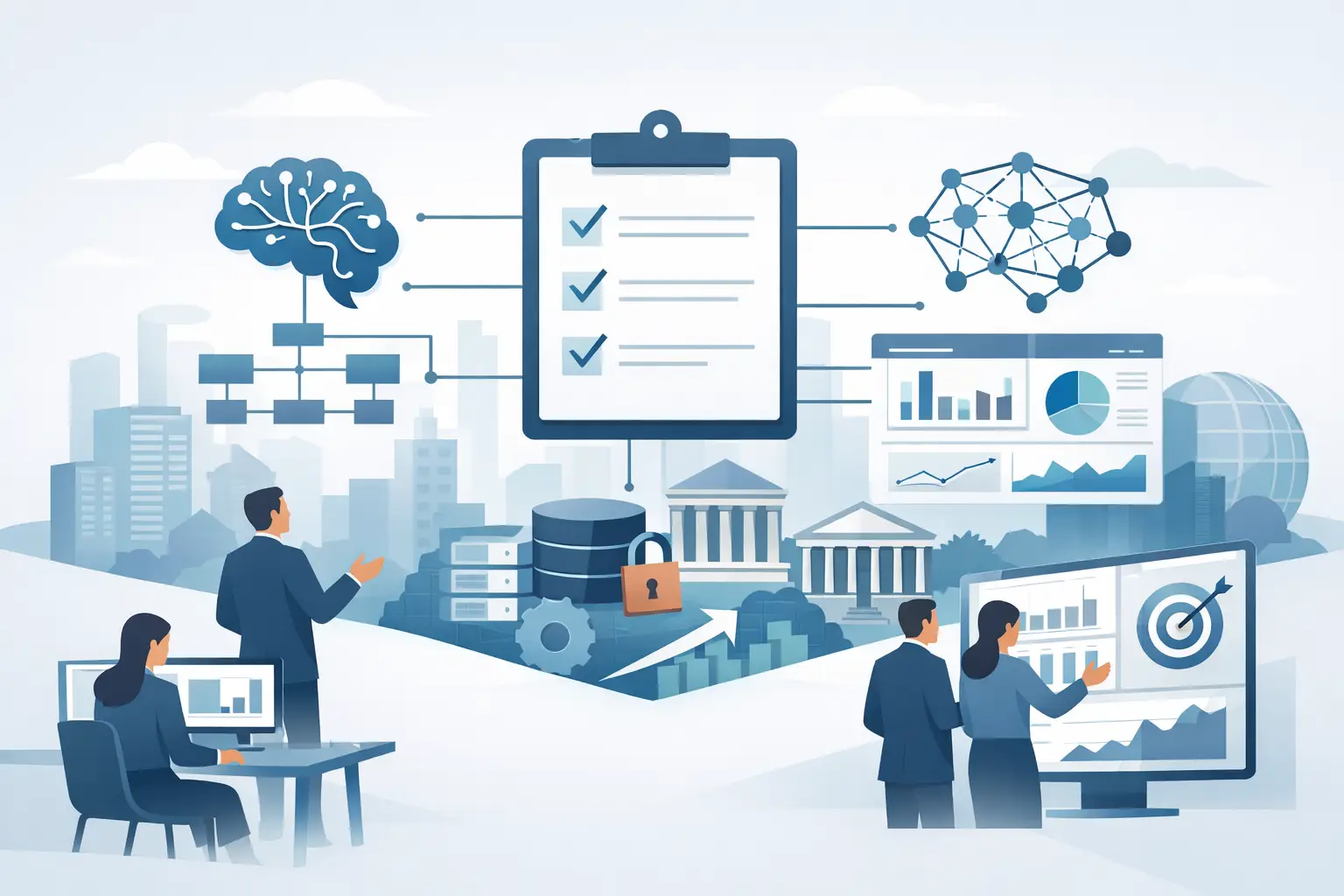
A customer record can move from a core banking system to a cloud lakehouse, a reporting dashboard, a data science workspace, and an external regulatory submission in a matter of hours. If its sensitivity is unclear at any point, controls become inconsistent, access expands without purpose, and risk teams cannot reliably demonstrate compliance.
Knowing how to classify sensitive data is therefore not a documentation exercise. It is a foundational operating capability for institutions that need trusted analytics, controlled AI adoption, and defensible governance across complex data estates. For banks, insurers, government agencies, GLCs, and large enterprises, classification determines which data can be used, by whom, under what conditions, and for which business outcome.
Why data classification is an enterprise control point
Sensitive data classification assigns a business-recognized level of sensitivity to data based on its content, regulatory obligations, potential harm if disclosed or misused, and operational value. The result should inform practical controls: access policies, encryption requirements, retention schedules, masking rules, monitoring, data-sharing approvals, and incident response priorities.
Without a common classification model, teams often make local decisions. A data engineer may label a field as personally identifiable information, while a business unit treats the same field as routine customer data. A data scientist may receive broad access to a production dataset because the alternative is slow. Over time, these exceptions become the de facto data policy.
The issue is amplified in analytics modernization programs. Data platforms consolidate information that was previously separated by application boundaries. This creates substantial value for decision intelligence, fraud detection, customer service, and planning. It also means that a single analytical dataset may combine customer identifiers, transaction details, health information, employee records, and confidential commercial data. Classification must travel with the data, not remain trapped in the source system.
How to classify sensitive data: start with business risk
An effective program starts by defining what the organization is protecting and why. Technical data types alone are not enough. A national identification number is clearly sensitive, but a combination of account balance, branch location, and transaction behavior may also create material privacy, fraud, or reputational risk even when each attribute appears harmless in isolation.
Build the classification policy around a small number of levels that people can apply consistently. Four levels are often sufficient: public, internal, confidential, and restricted. The labels can vary, but their meaning must be stable across the enterprise.
Public data can be disclosed without material harm, such as approved corporate communications or published statistics. Internal data is intended for employees and authorized contractors but would not normally cause significant impact if exposed. Confidential data includes non-public business information, operational reporting, commercial agreements, and many customer-related records. Restricted data represents the highest-impact information, including credentials, payment data, identity documents, sensitive personal information, regulated customer records, law-enforcement-related data, or highly confidential government and financial information.
The number of levels matters less than the decision criteria behind them. For each level, define the impact of unauthorized disclosure, alteration, loss, or inappropriate use. A practical policy considers several dimensions:
- Legal and regulatory obligations, including privacy, financial services, records management, and sector-specific requirements.
- Harm to individuals, such as identity theft, discrimination, financial loss, or loss of privacy.
- Harm to the institution, including fraud exposure, contractual breach, regulatory action, operational disruption, and reputational damage.
- Sensitivity created by aggregation, where multiple low-risk fields become high-risk when combined.
- Context of use, because data approved for a controlled regulatory report may not be appropriate for an AI experimentation environment.
This risk-based approach prevents a common failure: classifying data solely by a predefined list of keywords. Pattern matching can identify email addresses, account numbers, and identification numbers. It cannot reliably assess business context, purpose, or the consequences of combining datasets.
Create a usable taxonomy, not a policy document that sits unused
A classification framework needs two layers. The first is the enterprise sensitivity level. The second is a set of data categories that explains the nature of the data. Categories may include personal data, sensitive personal data, financial data, payment data, authentication data, health data, legal records, commercially confidential data, and security telemetry.
This combination supports clearer policy decisions. For example, two datasets may both be classified as confidential, but a dataset containing employee performance records may require tighter access review than one containing internal sales forecasts. Similarly, a restricted dataset with payment information may require tokenization and defined handling standards that do not apply to every restricted asset.
Keep definitions concrete. Instead of stating that confidential data is “important information,” state which conditions place data in that class and which controls follow. Data owners, analysts, engineers, and compliance teams should be able to reach the same answer when reviewing a dataset.
The taxonomy should also account for derived data. A feature engineered for a credit risk model, a customer propensity score, or a fraud alert may not contain a direct identifier. Yet it can still be sensitive because it reveals financial behavior, eligibility, or risk assessment. Classification should cover raw data, transformed data, reports, models, and data products.
Discover and inventory data before applying labels
Classification cannot rely on institutional memory. Large organizations typically hold sensitive information across core applications, file shares, databases, SaaS platforms, data warehouses, lakehouses, reporting tools, APIs, and user-managed spreadsheets. A governance team cannot protect what it cannot locate.
Start with high-value and high-risk domains: customer, employee, financial, payment, claims, case management, and regulatory reporting data. Identify systems of record, data stores, major integrations, and the teams accountable for each domain. This creates an initial inventory that can be expanded iteratively.
Automated discovery tools can accelerate the process by scanning schemas, file content, metadata, and patterns. They are valuable for finding likely sensitive fields at scale, particularly in fragmented or legacy environments. However, automated results require validation. A field named `ID` could be a customer identifier, a product code, or a technical key. Conversely, a field with an obscure legacy name may contain highly restricted content.
Data profiling should be paired with business review. The data owner understands purpose and sensitivity. The platform team understands storage and movement. Security and compliance teams understand control obligations. Classification is most reliable when these perspectives are brought together through a defined workflow rather than informal email exchanges.
Assign ownership and make classification operational
Every critical dataset needs an accountable owner, usually from the business domain that creates or is responsible for its use. The owner determines the appropriate classification, approves intended uses, and reviews access where required. Data stewards can maintain definitions and metadata quality, while engineering teams implement controls in the platform.
The classification label should be stored as metadata in a data catalog or governance platform and propagated through pipelines where possible. If a source table is restricted, its downstream curated tables, extracts, and feature sets should inherit that status unless a documented transformation reduces the risk. De-identification may lower a classification, but only after validation that re-identification risk and residual obligations have been addressed.
This is where architecture matters. In a modern lakehouse or hybrid data environment, classifications should drive policy enforcement through tags, role-based and attribute-based access controls, dynamic masking, row-level security, encryption, and audit logging. Manual approvals may be suitable for exceptional access, but they do not scale as the number of users, datasets, and data products grows.
For example, a relationship manager may need access to identified customers within an assigned portfolio, while an enterprise analyst may only need aggregated trends. A fraud investigator may require time-bound access to restricted transaction data, with full auditability. Classification provides the policy signal; identity, access, and platform controls enforce it.
Treat AI use as a classification test
AI readiness raises the standard for classification because data is often reused in ways that were not anticipated when it was collected. Before data enters a machine learning pipeline, retrieval system, or generative AI workflow, teams need to know its sensitivity, source, permitted purpose, retention requirements, and sharing limitations.
A useful control is to define approved handling patterns by classification. Public and selected internal data may be eligible for broader experimentation. Confidential data may require a controlled workspace, approved purpose, and access logging. Restricted data may be prohibited from external model services, limited to sovereign or private environments, or permitted only after masking, tokenization, or anonymization.
The right decision depends on regulatory obligations, model use case, contractual commitments, and the institution’s risk appetite. The key is that data classification makes this decision deliberate. It prevents AI teams from treating a dataset as acceptable simply because it is technically available.
Measure quality and review classifications over time
Classification programs degrade when they are treated as one-time remediation projects. New data sources arrive, schemas change, business processes evolve, and retention periods expire. Governance leaders should track coverage of critical data assets, percentage of sensitive fields classified, unresolved discovery findings, access-policy exceptions, and the time required to remediate mislabeled data.
Periodic recertification is particularly important for restricted domains and highly used data products. Owners should confirm that classifications remain accurate, downstream access remains appropriate, and retention or deletion requirements are being met. This review can be risk-based rather than universal. A high-volume customer data platform warrants more frequent attention than a stable archive with limited access.
The most mature organizations make classification part of data product delivery. A dataset is not considered ready for enterprise use until its owner, purpose, quality expectations, sensitivity level, access policy, and retention requirements are defined. That discipline reduces later friction because governance is built into the delivery process rather than added after data has already spread.
The practical goal is not to label every byte perfectly on day one. It is to establish a trusted, repeatable way to identify high-risk information, apply proportionate controls, and improve coverage as the data estate evolves. When classification is embedded in governance and platform operations, trusted data becomes easier to share for the decisions and AI use cases that genuinely matter.