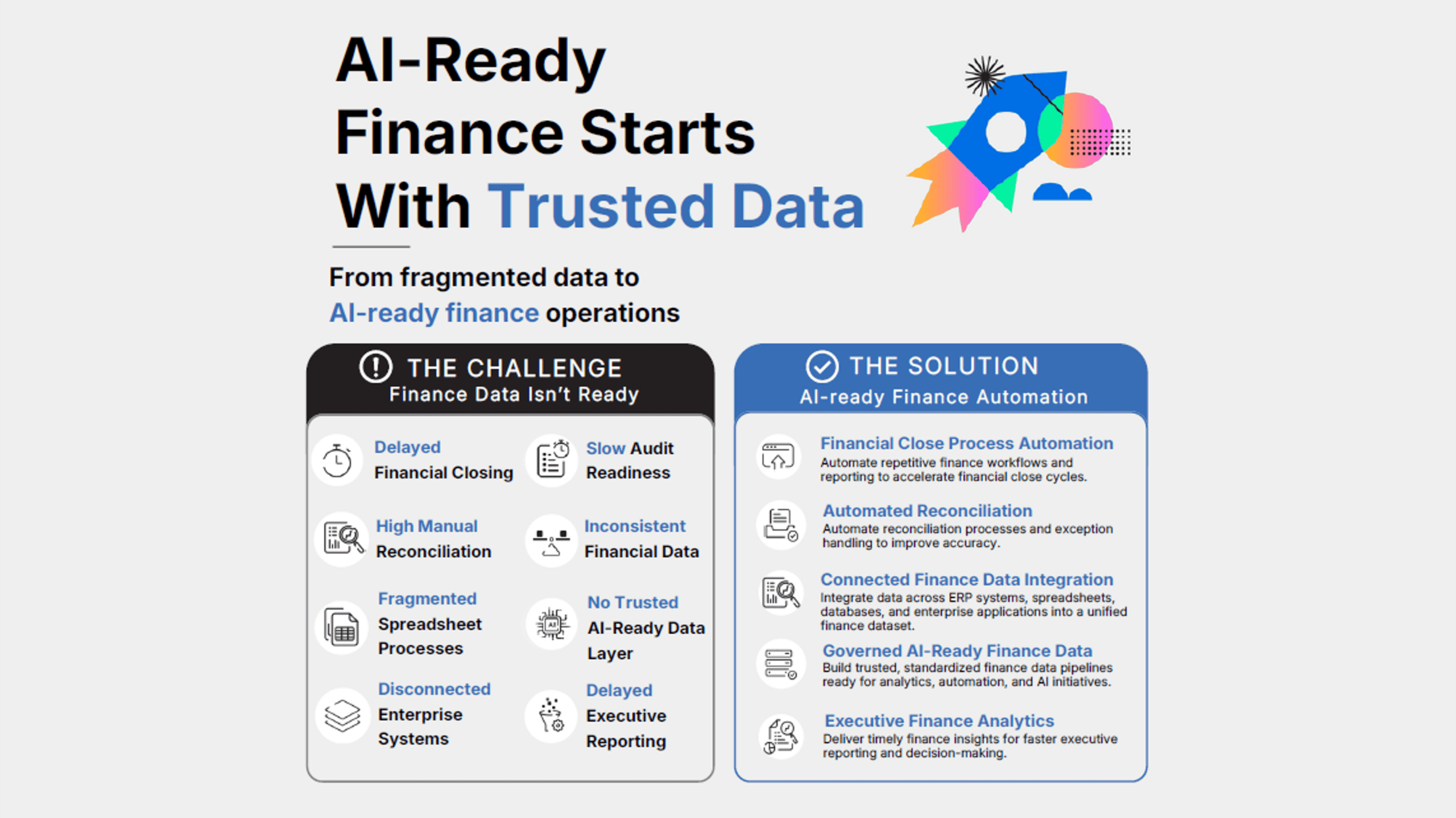
A risk team challenges a credit exposure figure, a regulator asks where a report value originated, or an AI team cannot determine whether a dataset contains approved customer information. In each case, the underlying issue is rarely a lack of data. It is the inability to find, understand, trust, and govern it. The best data catalog features enterprises need address this operational gap by turning dispersed technical metadata into usable institutional knowledge.
For BFSI institutions, government agencies, GLCs, and large enterprises, a data catalog is not simply a search interface for tables. It is a control point between data platforms, business definitions, governance obligations, and analytical consumption. Its value depends less on the number of assets indexed than on whether people can make defensible decisions faster.
What Enterprise Data Catalogs Must Actually Solve
Enterprise data estates are rarely centralized in a single platform. They span core systems, cloud data platforms, lakehouses, data warehouses, operational applications, reporting tools, files, and partner feeds. A catalog must provide a coherent view across those environments without forcing every dataset into one physical location.
That requirement changes the evaluation criteria. Business leaders need confidence that critical reports use approved data. Data engineers need to understand downstream dependencies before changing a pipeline. Compliance teams need evidence of data ownership, access controls, retention, and lineage. Analysts need to locate the right dataset without relying on informal knowledge held by a few experienced employees.
A catalog that only inventories technical objects may help engineers, but it will not create enterprise-wide trust. Conversely, a highly polished business glossary with little connection to actual pipelines quickly becomes outdated. The strongest implementations connect both sides.
Best Data Catalog Features for Enterprises
1. Automated metadata harvesting across hybrid environments
The foundation is automated metadata collection from data warehouses, lakehouses, databases, ETL and ELT pipelines, BI platforms, APIs, and selected file repositories. Manual registration cannot keep pace with enterprise change, particularly where new data products and dashboards are released frequently.
Automation should capture schemas, columns, query history where appropriate, data classifications, job schedules, ownership signals, and usage patterns. The trade-off is that harvesting creates volume, not meaning. Enterprises still need governance processes to validate what is critical, sensitive, approved, or obsolete.
For organizations operating cloud, on-premises, and sovereign environments, connector coverage and deployment architecture matter. Metadata collection must respect network segmentation, data residency requirements, and security boundaries. In many cases, metadata can be centralized while sensitive source data remains within its required jurisdiction.
2. Business glossary and shared semantic definitions
A catalog becomes valuable to executives and business users when it explains what data means, not just where it resides. Terms such as customer, active account, non-performing loan, policyholder, revenue, or service completion rate often have different definitions across departments.
A governed business glossary establishes approved definitions, calculation rules, accountable owners, and related data assets. It should link a business term to the reports, dashboards, tables, and metrics that implement it. This reduces a common source of reporting disputes: teams using the same label for materially different calculations.
The objective is not to impose a single definition on every use case. Some measures legitimately vary by regulatory reporting, finance, operations, or risk context. The catalog should make those variations explicit, including which definition is authoritative for each decision process.
3. End-to-end data lineage that supports change control
Lineage traces data from its origin through transformations to reports, models, and operational outputs. For a regulated enterprise, this is evidence. For an engineering team, it is a practical way to assess the consequences of a change before deployment.
Effective lineage should include both technical and business context. A data engineer may need column-level lineage to investigate a pipeline failure, while a risk leader may need a clear path from a regulatory metric back to approved source systems and transformation rules. Visual diagrams are useful, but searchable lineage and impact analysis are more important when environments become complex.
Not every asset requires the same level of lineage. Column-level tracking for every exploratory dataset can create unnecessary effort and noise. Prioritize critical data elements, regulated reports, financial measures, customer data, and inputs to material decision models.
4. Data quality visibility and observable trust signals
A catalog should not merely state that a dataset is certified. It should show why users can rely on it. This requires visible quality rules, freshness expectations, completeness measures, reconciliation status, incident history, and known limitations.
Trust signals help users make better decisions at the point of consumption. An analyst can see that a dataset is current, owned, quality-monitored, and approved for a particular purpose. A finance team can identify that a feed is delayed before incorporating it into a forecast. A model development team can avoid using data with unresolved quality issues.
Quality scores should be interpreted carefully. A single aggregate score can conceal serious problems in a critical field. For enterprise use, catalog quality information should preserve the detail needed to identify which rules failed, who is accountable, and whether the issue affects a defined business process.
5. Classification, privacy, and policy-aware access workflows
Catalogs play a meaningful role in protecting sensitive information when classification is connected to access and governance processes. Automated detection can identify likely personal data, financial information, confidential government records, or restricted commercial information. Stewards then validate classifications and assign policies.
The catalog should expose enough information for users to request access correctly without exposing restricted values. It can show that a dataset contains personal information, identify its business owner, explain permitted use, and route an access request through the correct approval workflow.
This capability is particularly relevant where institutions must demonstrate purpose limitation, segregation of duties, and controlled handling of sensitive records. A catalog does not replace identity management, encryption, or data loss prevention. It makes those controls more usable by connecting policy to the data assets affected by it.
6. Ownership, stewardship, and accountability
Metadata without accountable owners becomes stale. Every critical dataset, data product, business term, and quality rule should have a named business owner, technical owner, or steward with responsibilities that match their authority.
Ownership fields alone are insufficient. The operating model must define what owners are expected to approve, how often metadata is reviewed, how incidents are escalated, and when an asset can be marked certified or deprecated. Catalog workflows should support these actions rather than turning governance into a separate spreadsheet exercise.
For large institutions, federated stewardship is often more sustainable than a small central team attempting to curate everything. Central governance can define policy, standards, and minimum controls, while domain teams maintain the context that only they possess.
7. Search, discovery, and data product context
Search is the visible feature users notice first, but enterprise search must be more than keyword matching. It should allow people to find assets by business term, domain, owner, classification, quality status, certification, usage, or source system. Search results should help users distinguish an official curated dataset from a temporary engineering table.
The best catalogs also provide data product context: intended use, consumer groups, service levels, update frequency, access instructions, and dependencies. This moves the organization away from raw asset discovery toward managed, reusable data products.
Usage telemetry can further improve discovery. Frequently used datasets are not automatically authoritative, but usage patterns can reveal undocumented dependencies, redundant reports, and high-value assets that deserve formal governance.
Turning Features Into an Operating Capability
A feature checklist alone does not produce trusted data. Enterprises should begin with a limited set of high-value domains, such as customer, finance, risk, claims, procurement, or citizen services. Select use cases where poor data discoverability or weak lineage has a measurable operational cost: delayed reporting, audit remediation, repeated data preparation, failed reconciliations, or slow model approval.
Then establish minimum metadata standards for those domains. At a practical level, that means defining required ownership, business descriptions, classifications, lineage expectations, quality controls, and certification criteria. Automate collection wherever possible, but reserve human stewardship for the information that requires business judgment.
Adoption should be measured through behavior, not catalog population alone. Useful measures include time to locate approved data, percentage of critical data elements with assigned owners, lineage coverage for material reports, unresolved quality incidents, reuse of certified data products, and reduction in duplicate analytical extracts.
ORTECH approaches data catalog initiatives as part of a broader AI-ready data foundation. The catalog should connect analytics engineering, governance, data quality, and decision intelligence rather than stand apart as another isolated platform.
The right catalog capabilities create a more disciplined relationship between people and enterprise data. When a team can see what a metric means, who owns it, where it came from, how current it is, and whether it is approved for use, data becomes easier to govern and far more useful for action.