A pilot model can look impressive in a workshop and still fail the moment it touches enterprise reality. The problem is rarely the model alone. In most cases, the real constraint is the data foundation behind it. AI ready data platforms exist to solve that gap by turning fragmented, inconsistent, and poorly governed data into something the business can actually trust at scale.
For CIOs, CDOs, CTOs, and data leaders, this is not a narrow infrastructure discussion. It is a question of whether the organization can operationalize AI in a controlled, repeatable, and measurable way. If the platform cannot support lineage, policy enforcement, data quality, and cross-functional consumption, then AI remains experimental, regardless of how strong the ambition may be.
Why AI ready data platforms matter now
Many enterprises already have data warehouses, reporting environments, integration tools, and cloud storage. Yet those investments often sit in disconnected layers built for historical reporting rather than machine learning, automation, or decision intelligence. A business may have plenty of data, but not enough trusted data products that are timely, governed, and usable across teams.
That distinction matters. AI systems depend on data that is consistent over time, explainable under scrutiny, and accessible without creating governance risk. In regulated sectors such as banking, insurance, and government, the cost of weak foundations is not limited to poor model performance. It can also create audit exposure, policy breaches, and operational delays when teams cannot validate where data came from or how it was transformed.
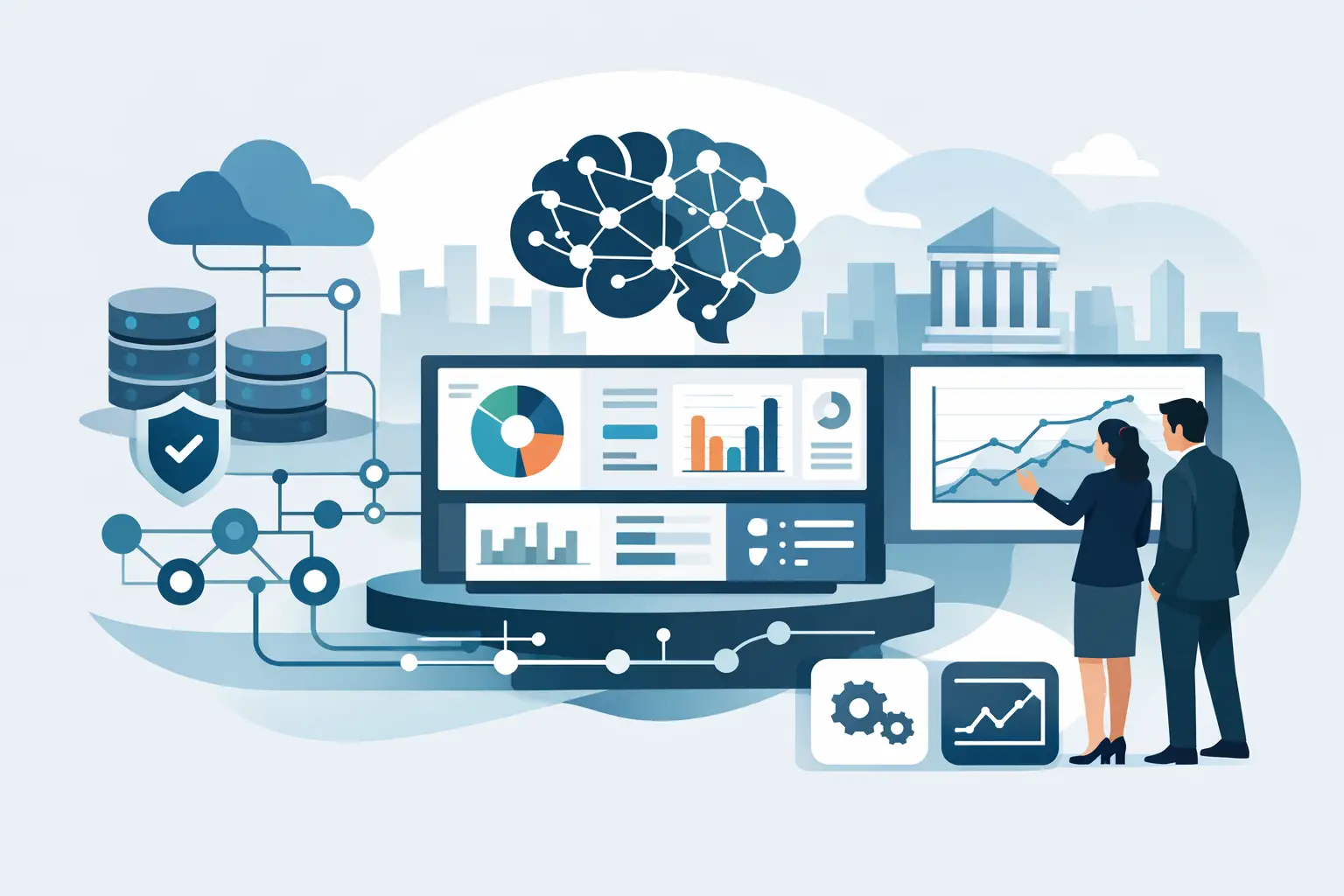
An AI-ready platform therefore is not just a place to store data. It is an operating environment for trusted intelligence. It supports analytics, machine learning, automation, and decision support on top of governed pipelines and clear accountability.
The core design of AI ready data platforms
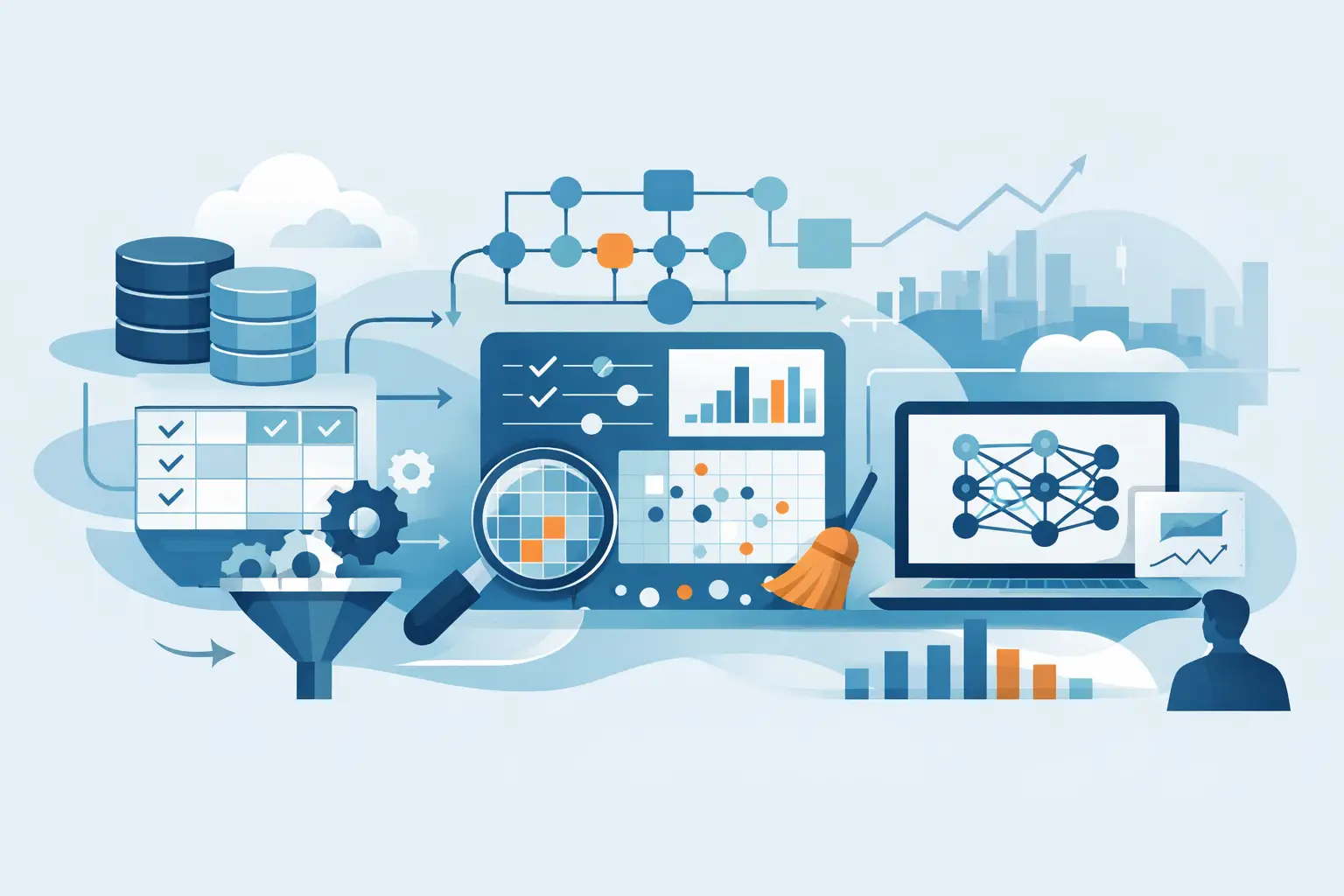
At the architectural level, AI ready data platforms bring together ingestion, transformation, storage, governance, and consumption in a way that supports both flexibility and control. The exact design varies by organization, but the underlying principles are consistent.
First, data has to move from source systems into the platform in a reliable and observable manner. Batch pipelines may still be appropriate for finance, regulatory, or monthly planning workloads. Real-time or near-real-time pipelines become more relevant when use cases involve fraud detection, customer interactions, or operational monitoring. The right choice depends on business need, not fashion.
Second, transformation must be engineered rather than improvised. Raw data rarely arrives in a state suitable for AI. Definitions conflict, identifiers do not align, business rules are undocumented, and source quality varies significantly. Analytics engineering plays a central role here because it creates reusable, tested, and version-controlled transformations that produce trusted datasets rather than one-off extracts.
Third, storage architecture must support multiple consumption patterns. This is where lakehouse approaches have gained traction. They allow organizations to retain the scale and flexibility of data lakes while introducing more structure, performance, and governance for analytical workloads. Still, a lakehouse is not automatically AI-ready. If metadata is weak, quality controls are missing, and stewardship is unclear, the architecture will underperform regardless of the technology stack.
Governance is not a layer you add later
A common failure pattern is to build for speed first and add governance after adoption. In practice, this usually creates rework. Once data is already spread across pipelines, notebooks, dashboards, and model artifacts, retrofitting control becomes expensive and politically difficult.
AI ready data platforms need governance embedded from the start. That includes data classification, access controls, lineage, retention policies, quality monitoring, and approval workflows where required. For executives, the point is not bureaucracy. The point is confidence. Leaders need to know that data used in forecasting, risk assessment, or public service decisions can be defended if challenged.
This is especially relevant in sovereign and regulated environments. Data residency, cross-border movement, privacy obligations, and internal policy constraints can shape platform design as much as performance requirements do. A technically elegant design that ignores these constraints will not survive enterprise adoption.
What separates a modern platform from a usable one
There is often a gap between having modern tooling and having an effective data platform. Enterprises can invest heavily in cloud services, orchestration frameworks, and AI tooling yet still struggle to move beyond isolated use cases.
The difference usually comes down to operational discipline. A usable platform has clear ownership. Data products are defined around business outcomes. Pipeline failures are monitored. Quality thresholds are agreed upon. Semantic definitions are managed consistently across reports, models, and business functions. Teams know which datasets are authoritative and which are exploratory.
Without that discipline, the platform becomes a technical estate rather than an enterprise capability. AI teams spend too much time sourcing and cleaning data. Risk teams question outputs they cannot trace. Business stakeholders revert to manual workarounds because trust was never established.
The operating model behind AI ready data platforms
Technology alone does not make a platform AI-ready. The operating model is just as important. This is where many transformation programs stall, because the architecture is approved but the organization does not change how data is managed.
An effective operating model usually includes a federated balance. Central teams define standards, architecture patterns, governance controls, and shared services. Domain teams remain responsible for the business meaning, quality, and use of their data products. That balance matters because excessive centralization slows delivery, while excessive decentralization creates fragmentation.
Capability transfer also matters. If the platform depends entirely on external implementation teams, long-term adoption weakens. Internal engineering, governance, and analytics teams need the skills to operate, extend, and improve the platform over time. This is particularly important for public institutions and large enterprises where continuity, auditability, and institutional memory are essential.
How to assess whether your platform is AI-ready
A useful assessment starts with business outcomes, not tooling. Ask whether the current platform can support repeatable AI and analytics use cases with sufficient trust, speed, and control.
If data scientists are still rebuilding datasets manually for each project, readiness is low. If business users receive different answers from different reporting environments, readiness is low. If access requests take weeks, quality issues are discovered late, or governance teams operate separately from platform teams, readiness is also low.
By contrast, stronger maturity is visible when trusted datasets are reusable across use cases, policy controls are enforced consistently, lineage is available, and new initiatives can move from concept to production without rebuilding foundational components each time. That does not mean the platform is finished. It means the organization has moved from experimentation to institutional capability.
Trade-offs leaders should address early
There is no single blueprint for AI ready data platforms because enterprise constraints differ. Some organizations need hybrid architectures for sovereignty or latency reasons. Others can centralize more aggressively in the cloud. Some need real-time data products; others gain more value from strengthening core batch pipelines and governance first.
The key is sequencing. Trying to solve every platform problem at once often delays value. A more effective approach is to prioritize high-impact domains, establish shared standards, and expand through reusable patterns. This creates momentum without sacrificing control.
Leaders should also be realistic about technical debt. Legacy systems will not disappear overnight, and not every workload needs immediate modernization. The better question is which data assets and decision flows most affect revenue, risk, compliance, service delivery, or operational efficiency. Those are the areas where platform investment should be anchored.
Building for trust, not just scale
Scale gets attention because it is easy to quantify. Trust is harder to measure, but it is what determines whether a platform actually supports enterprise AI. If decision-makers doubt the source data, if compliance teams cannot verify controls, or if engineers cannot maintain pipeline integrity, scale has limited strategic value.
That is why the strongest AI-ready platforms are built with equal attention to architecture, governance, and operating model. They are designed to produce trusted data products, support multiple analytical workloads, and enable teams to move faster without lowering standards. In practice, that is what turns data modernization into business capability rather than technical change.
For organizations planning their next phase of analytics and AI investment, the useful question is not whether to adopt more AI. It is whether the data platform can carry the weight of real decisions, real controls, and real operational demand.