A dashboard that changes every week is not an analytics problem. It is usually a systems problem.
That is the context behind the question, what is analytics engineering. In enterprise environments, reports fail, metrics drift, and AI initiatives stall because the path from raw data to decision-ready data is inconsistent, undocumented, or impossible to govern at scale. Analytics engineering emerged to solve that gap. It brings engineering discipline to the analytics layer so data becomes reliable, reusable, and fit for operational use.
What is analytics engineering in practice?
Analytics engineering is the discipline of designing, transforming, testing, documenting, and managing data models that sit between raw data pipelines and business reporting, analytics, and AI use cases. It combines the rigor of software engineering with the business context of analytics.
In simple terms, analytics engineers take data from source systems such as ERP platforms, CRM tools, transaction systems, and operational databases, then shape that data into trusted datasets the business can actually use. These datasets are not just cleaner tables. They are governed assets with consistent logic, defined ownership, documented metrics, and quality controls that support reporting, decision systems, and advanced analytics.
This is why analytics engineering matters in large organizations. Raw data alone does not create intelligence. Someone has to define how revenue is calculated, how customer status is classified, which source is authoritative, how refresh logic works, and what should happen when source data changes. Analytics engineering formalizes that work.
Why analytics engineering became essential
Many enterprises built their analytics environments in layers over time. One team created ETL jobs. Another team built reports. A third team exported spreadsheets to reconcile gaps. The result is familiar: duplicated logic, conflicting KPIs, slow change cycles, and weak trust in analytics outputs.
Analytics engineering addresses this by creating a controlled middle layer between ingestion and consumption. Instead of every dashboard or analyst rebuilding business logic independently, the organization develops shared transformation models that can be tested, versioned, reviewed, and reused.
That shift has become more urgent for three reasons.
First, cloud and hybrid data platforms have made it easier to centralize large volumes of data, but centralization without structure simply moves the mess into a new environment. Second, AI initiatives depend on stable and well-governed data foundations. If the training or inference data is inconsistent, the model output will be inconsistent too. Third, governance expectations in regulated sectors such as banking, financial services, and the public sector have tightened. Leaders need traceability, accountability, and data quality controls, not just faster dashboards.
Where analytics engineering sits in the data stack
Analytics engineering sits downstream from data ingestion and upstream from business consumption.
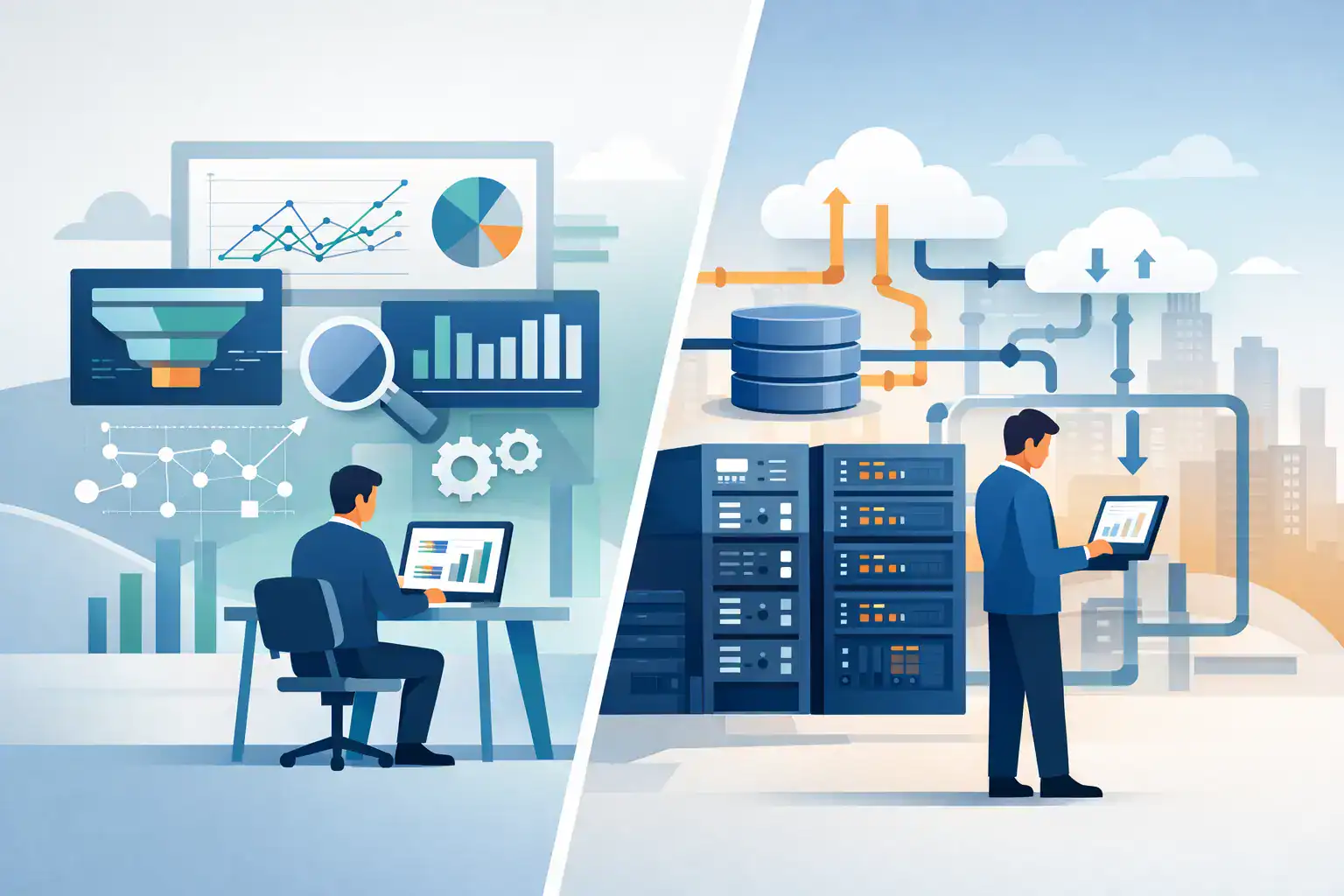
A data engineering team typically focuses on moving and storing data from source systems into a warehouse, lakehouse, or hybrid platform. Business intelligence teams focus on dashboards, self-service reporting, and user-facing analysis. Data scientists may work on forecasting, segmentation, or machine learning. Analytics engineering connects these domains.
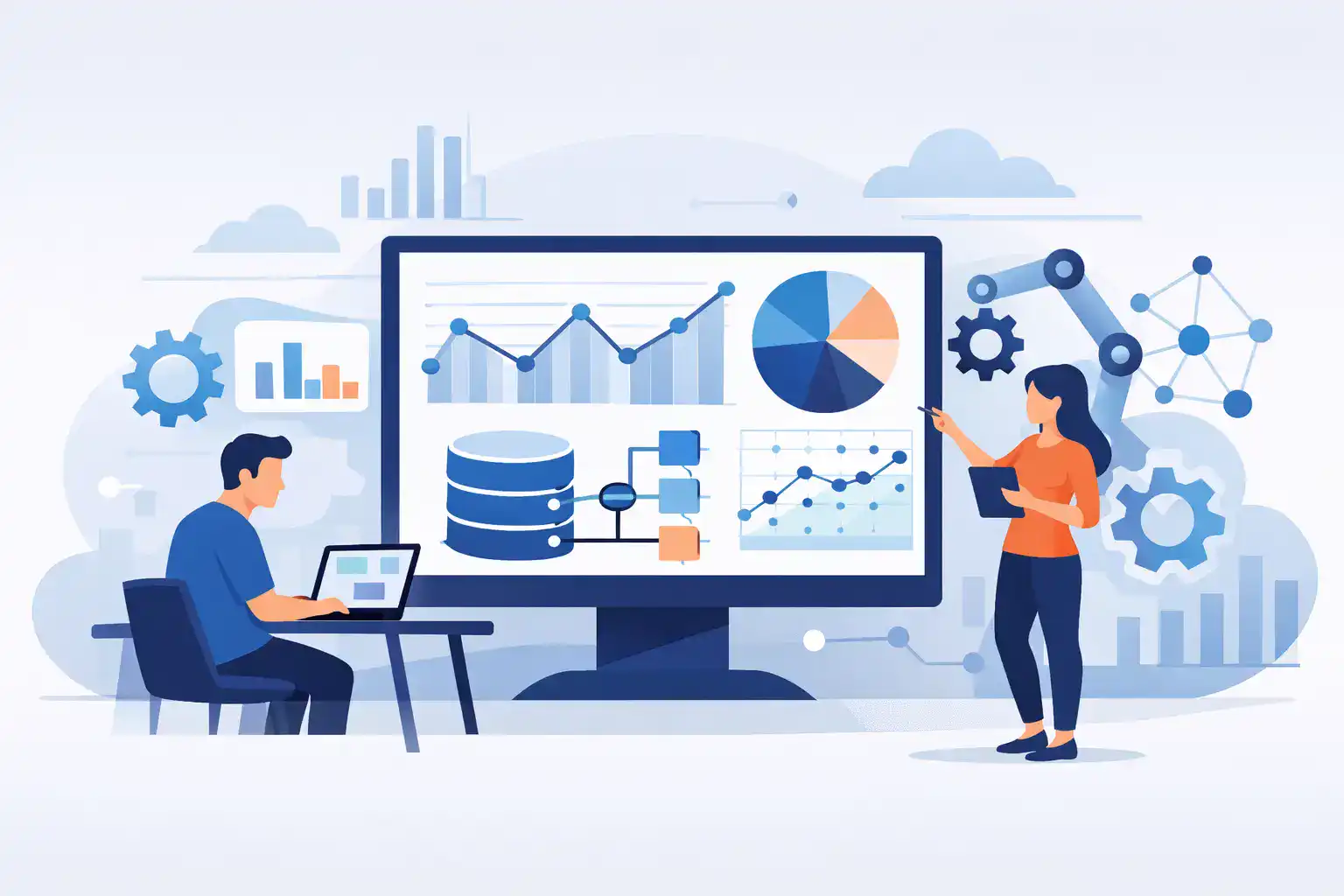
The analytics engineer works on the curated layer where business logic is defined and maintained. That includes creating dimensional models, fact tables, semantic layers, transformation workflows, data quality tests, lineage documentation, and metric definitions.
In mature environments, this role also supports platform standards. That means naming conventions, code review practices, deployment processes, access controls, and change management for analytics models. In other words, analytics engineering is not only about data transformation. It is also about making analytics development reliable at enterprise scale.
What analytics engineers actually do
The day-to-day work is more operational than the title sometimes suggests. Analytics engineers build transformation pipelines that convert raw source data into usable models. They create logic for business entities such as customers, products, transactions, claims, cases, assets, or service interactions. They test whether those models meet quality expectations and whether the outputs remain stable over time.
They also document the meaning of the data. That sounds basic, but it is often one of the highest-value activities in a complex organization. If two departments define active customer differently, no amount of visualization will solve the trust problem. Analytics engineering creates a single governed definition and embeds it into the platform.
Another major responsibility is managing change. Source systems evolve. New regulations appear. Business processes shift after a merger, policy update, or product launch. Analytics engineers assess the impact of those changes on data models and downstream reporting so the organization can adapt without breaking critical decisions.
The difference between analytics engineering and data engineering
The two disciplines are closely related, but they are not interchangeable.
Data engineering is primarily concerned with the movement, integration, and infrastructure of data. It answers questions such as how data is extracted, where it lands, how it is orchestrated, and how platform performance is managed.
Analytics engineering is primarily concerned with the transformation, usability, and trustworthiness of data for business consumption. It answers questions such as how metrics are defined, how business entities are modeled, how logic is tested, and how analytics assets are governed.
In smaller teams, one person may cover both areas. In enterprise settings, the distinction matters because the skills, controls, and operating models are different. A well-designed ingestion pipeline does not guarantee decision-grade data. Likewise, elegant business models cannot compensate for unstable infrastructure. It depends on the organization’s scale, regulatory exposure, and platform maturity, but the strongest environments treat both disciplines as essential.
What good analytics engineering looks like
Good analytics engineering is visible in outcomes, not in technical terminology.
Leaders see consistent metrics across departments. Analysts spend less time cleaning and reconciling data. Change requests move faster because logic is modular and documented. Audit and compliance teams can trace how a metric was derived. Data platform teams can scale transformation workloads without relying on manual workarounds.
At a technical level, strong analytics engineering usually includes tested transformation logic, reusable data models, clear lineage, documented business definitions, version control, and deployment discipline. It also reflects platform realities. A public sector agency with sovereign data requirements may need a very different architecture from a cloud-native digital business. The principles are the same, but the implementation is not.
Why analytics engineering matters for AI readiness
Many organizations talk about AI strategy before they have solved data consistency. That sequence creates risk.
AI systems depend on high-quality, well-labeled, and contextually accurate data. If the enterprise cannot define core entities consistently across systems, or if historical data cannot be trusted, AI projects become expensive experiments rather than operational capabilities.
Analytics engineering helps create the curated data products that AI teams need. It standardizes business logic, improves lineage, and makes it easier to understand what data should be used for training, fine-tuning, reporting, or automation. It also supports governance. In regulated industries, that matters as much as model performance. Leaders need confidence that AI outputs are grounded in traceable, policy-aligned data assets.
Common implementation challenges
The hard part is rarely the concept. The hard part is operationalizing it across fragmented teams and legacy systems.
One challenge is ownership. Analytics engineering often sits between data engineering, business intelligence, and domain teams, which can create ambiguity around who defines metrics and who approves changes. Another challenge is tooling fragmentation. Enterprises may run mixed environments across cloud warehouses, legacy databases, ETL platforms, and reporting tools. The analytics layer has to work across those realities rather than assuming a clean-sheet architecture.
There is also a cultural shift. Analytics work in many organizations has been treated as a reporting function, not an engineering discipline. Introducing testing, code review, model standards, and release management can feel slower at first. Over time, it reduces rework and improves trust, but that value has to be led intentionally.
This is why enterprise programs often benefit from an engineering-first implementation approach. The goal is not simply to produce dashboards faster. It is to establish a scalable analytics operating model with governance built in from the start. That is especially relevant for institutions managing sensitive data, complex audit requirements, or long-term modernization roadmaps. ORTECH approaches analytics engineering from that perspective – as a foundation for operational intelligence, not a layer of cosmetic reporting.
When should an organization invest in analytics engineering?
Usually, the signal appears before the label does.
If your teams are debating which revenue number is correct, rebuilding the same transformations in multiple tools, or delaying AI use cases because source data is inconsistent, you already have an analytics engineering problem. The same applies if dashboard delivery depends on a handful of people who understand undocumented logic that no one else can maintain.
For enterprise and public sector leaders, the decision is less about whether analytics engineering is needed and more about how formally it should be established. A modest analytics environment may start with a focused modeling and governance layer. A large regulated organization may need a full operating model with standards, stewardship, testing, training, and platform alignment across business units.
The right starting point depends on architecture maturity, regulatory obligations, internal capability, and the pace of change the organization is facing. But the direction is clear. If data is expected to support executive decisions, automation, and AI, the analytics layer cannot remain informal.
The most useful way to think about analytics engineering is this: it is where enterprise data stops being a collection of source records and starts becoming a system the business can trust.